

How the Validation Ecosystem TestSphere Unleashes Its Potential by Standardizing and Optimizing Testing Processes
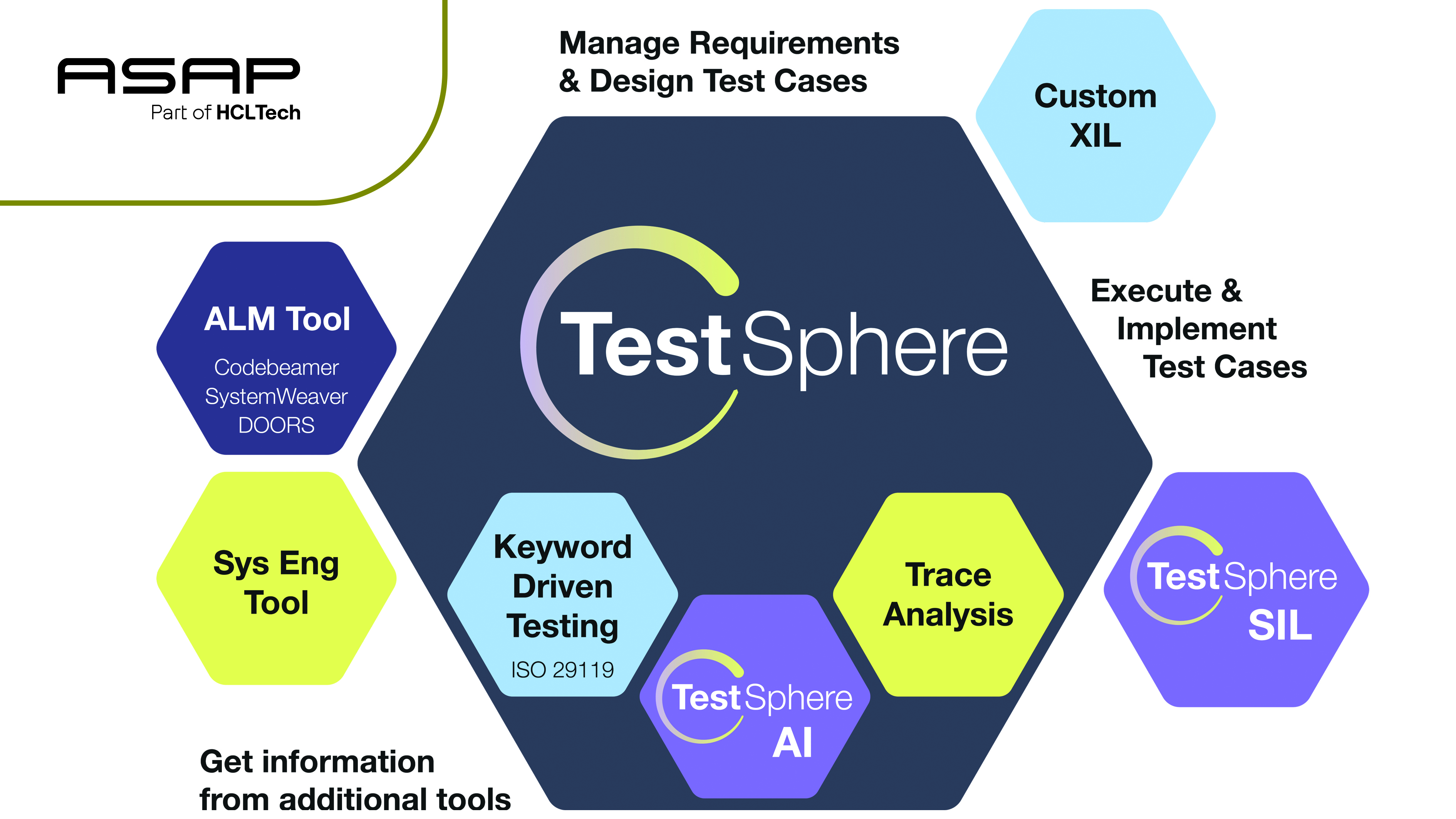
Recognizing these requirements, experts at ASAP have meticulously developed the end-to-end validation system TestSphere over several years. This system standardizes and optimizes testing processes, incorporating the continuous expertise of HCLTech professionals. TestSphere leverages Keyword Driven Testing (KDT) based on the ISO 29119 standard and includes a generic framework for the efficient development of a SIL test system.
Modularizing and reusing existing building blocks
TestSphere's SiL architecture is distinguished by its modularity and scalability, which are essential for efficient validation processes. The architecture is built on existing building blocks that ensure flexibility and adaptability. This approach allows for seamless integration and rapid adaptation to various testing scenarios, enhancing the overall efficiency of the validation ecosystem.
The SIMcore is the primary component of TestSphere's SiL system, responsible for environment simulation. It incorporates various simulation tools such as CarMaker, Carla, and others. The selection of tools within the SIMcore is determined by the specific requirements of the individual software component. The SIMcore's ability to integrate diverse simulation tools makes it a versatile and powerful component of the SiL architecture.
The Interface Provider plays a crucial role in separating the SIMcore from the virtual electronic control unit (vECU). This separation allows a seamless exchange of parts or the entire environment simulation without necessitating changes to the vECU. The Interface Provider ensures that the simulation environment can be easily modified or updated without impacting the vECU, thereby enhancing the overall flexibility and efficiency of the testing process.
The vECU contains the software component to be tested. Depending on the test case and objective, vECUs ranging from Level 1 to Level 4 can be integrated. The necessary vehicle bus simulation is integrated into the Interface Provider and varies based on the vECU level:
- Level 1 requires no bus simulation.
- Level 2 and above require partial bus simulation for validating inter-ECU communication.
This hierarchical approach ensures that the appropriate level of simulation is applied based on the complexity and requirements of the test case. The vECU's ability to simulate different levels of complexity makes it a versatile and essential component of the SiL architecture.
The Test Framework serves as the interface between the test bench and the test case implementation. It ensures that test cases can be executed and evaluated on the SiL test bench and facilitates reporting to TestSphere. The Test Framework is responsible for managing test routines, providing a unified editor for writing and updating test cases, and automating the test implementation process.
By clearly defining interfaces between the components and communication middleware within the SiL base framework, rapid adaptation to any test objects and environment simulations is achievable. The Test Framework's ability to manage and automate the testing process is a key aspect of TestSphere's modular SiL architecture. TestSphere's modular and scalable SiL systems significantly enhance the efficiency of the validation process, contributing to a shorter time-to-market.
TestSphere by ASAP and HCLTech exemplifies how innovative solutions can drive the transformation of the automotive industry, unleashing the full potential of the validation ecosystem.
From our archive



More News
New developments, exciting technologies, and insights into our daily project work – you’ll find all of this in our newsletter, the ASAP Newsroom, or our annual reports. Discover first-hand how we actively help shape the mobility of tomorrow.